
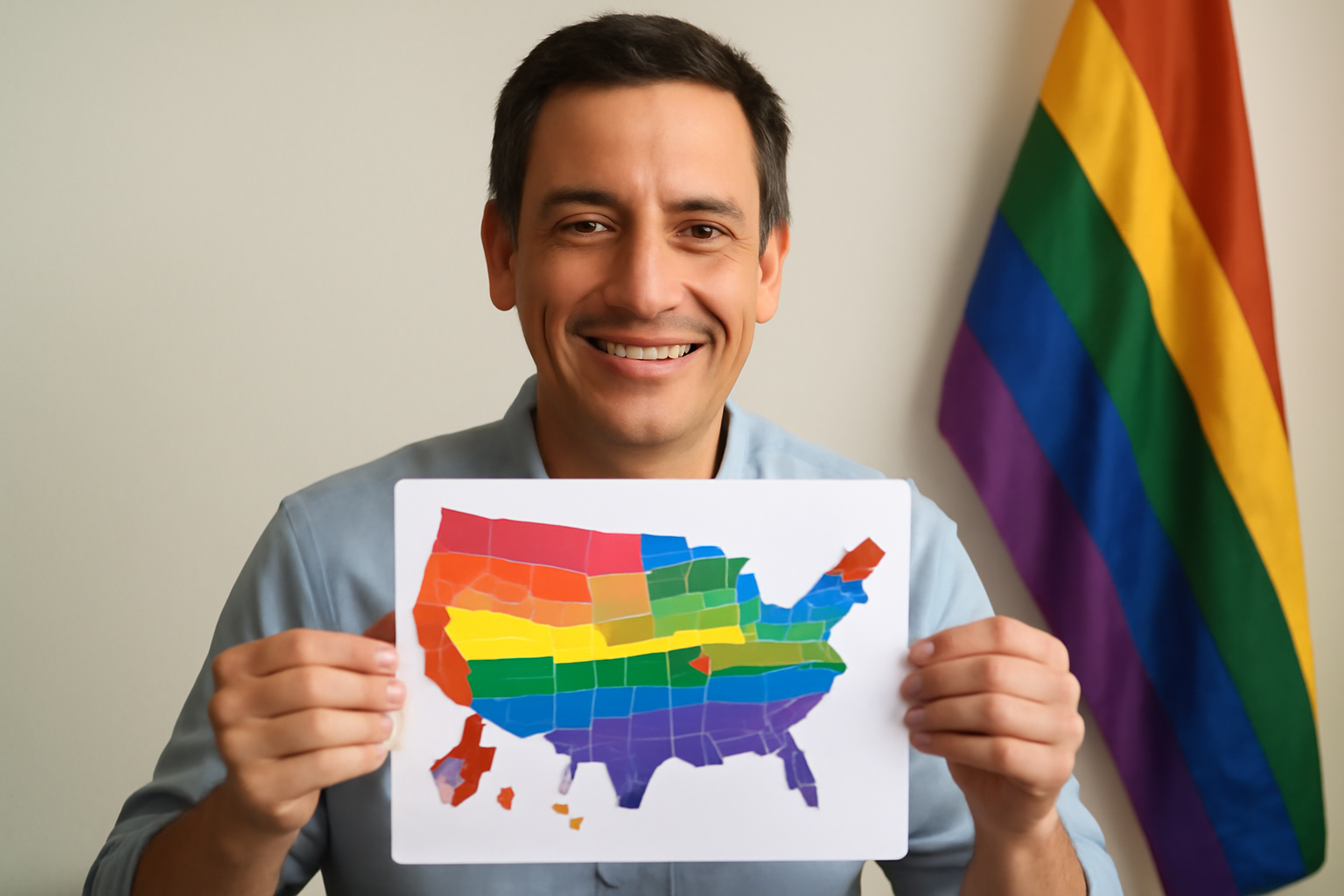
A recent report has shed light on the varying degrees of LGBTQ+ equality across the United States, revealing that nearly half of the states are falling behind in protecting the rights of LGBTQ+ individuals. This report, titled the State Equality Index, was produced by the Human Rights Campaign (HRC) and evaluates states based on their legislation and policies affecting the LGBTQ+ community.
According to the findings, 21 states, along with Washington DC, have been recognized for their progressive stance on LGBTQ+ rights, implementing inclusive laws and policies. However, the report also highlights that 24 states have been marked as having discriminatory legislation, placing them in the lowest category for equality.
Understanding the Categories
The State Equality Index categorizes states into four groups based on their legislative environment regarding LGBTQ+ equality. The categories range from states "working toward innovative equality" to those that are considered a "high priority to achieve basic equality." These distinctions help illustrate the progress and challenges faced across the nation.
In the past year alone, 489 anti-LGBTQ+ bills were introduced across various states, with 46 of them successfully enacted. The impact of such legislation is profound, with more than 70% of LGBTQ+ adults reporting negative effects on their mental health due to these laws.
The Most Supportive States
States that have excelled in promoting LGBTQ+ rights and equality include California, Colorado, Connecticut, and New York, among others. These states have been proactive in passing laws that safeguard the rights of LGBTQ+ individuals, ensuring access to gender-affirming care and protecting against discrimination.
Here is the full list of states leading in LGBTQ+ equality:
- California
- Colorado
- Connecticut
- Delaware
- District of Columbia (Washington DC)
- Hawaii
- Illinois
- Maine
- Maryland
- Massachusetts
- Michigan
- Minnesota
- Nevada
- New Hampshire
- New Jersey
- New Mexico
- New York
- Oregon
- Rhode Island
- Vermont
- Virginia
- Washington
States Facing Challenges
Conversely, states such as Alabama, Florida, and Texas have been identified as having significant room for improvement. These states have seen a rise in restrictive legislation, particularly targeting the trans community, which has led to reduced access to necessary care and increased discrimination.
Here is a list of states that are in the lowest category for LGBTQ+ equality:
- Alabama
- Arizona
- Arkansas
- Florida
- Georgia
- Idaho
- Indiana
- Kansas
- Kentucky
- Louisiana
- Mississippi
- Missouri
- Montana
- Nebraska
- North Carolina
- North Dakota
- Ohio
- Oklahoma
- South Carolina
- South Dakota
- Tennessee
- Texas
- West Virginia
- Wyoming
Five other states, including Alaska, Wisconsin, Iowa, and Pennsylvania, are making progress but still fall short of full equality. Utah, on the other hand, is considered as "building equality" and is on its way to more significant improvements.
Implications of the Report
Kelley Robinson, President of HRC, emphasized the importance of this report during a critical time in the nation’s history. She remarked that states with higher levels of equality tend to have stronger economies and more vibrant communities. The findings suggest that protecting LGBTQ+ rights not only fosters equality but also benefits society as a whole.
As the report highlights, the path forward is clear: ensuring dignity and potential for all residents leads to thriving communities. The rise in anti-LGBTQ+ legislation, particularly in recent years, underscores the ongoing battle for civil rights and the need for continued advocacy and awareness.
Join the conversation and share your thoughts on how we can collectively support the advancement of LGBTQ+ rights across the nation. Together, we can strive for a more inclusive and equitable society for everyone.
Related Posts
Supreme Court to Address State Bans on Trans Women in Female Sports
The upcoming U.S. Supreme Court term promises to be a pivotal moment for transgender rights, as the nation's highest court has agreed to evaluate whether states have the authority to prohibit transgender women from participating in female sports competitions. This case, scheduled to be argued in the next term beginning October, is expected to have a significant impact on the future of sports inclu [...]
Megan Rapinoe and Sue Bird Announce Amicable Separation After Ten Years Together
In a heartfelt announcement that resonated deeply within the sports and LGBTQ+ communities, soccer star Megan Rapinoe and basketball legend Sue Bird have revealed their decision to part ways after nearly a decade together. The couple, who have been icons both on and off the field, shared the news with their fans through a joint statement on social media, expressing that the choice was made with mu [...]
Groundbreaking Ruling Ends Sodomy Ban for Police and Military in the Dominican Republic
The Constitutional Court of the Dominican Republic recently delivered a landmark decision on November 18th, ruling that the nation’s police and armed forces are not permitted to criminalize consensual same-sex relations among their personnel. This pivotal ruling is a significant stride towards equality and the protection of LGBTQ+ rights within these institutions. A Resounding Victory for Equal [...]